
9mm Pistol for Sale: A South African Used-Buying Guide
By Geebo Editorial Team ·
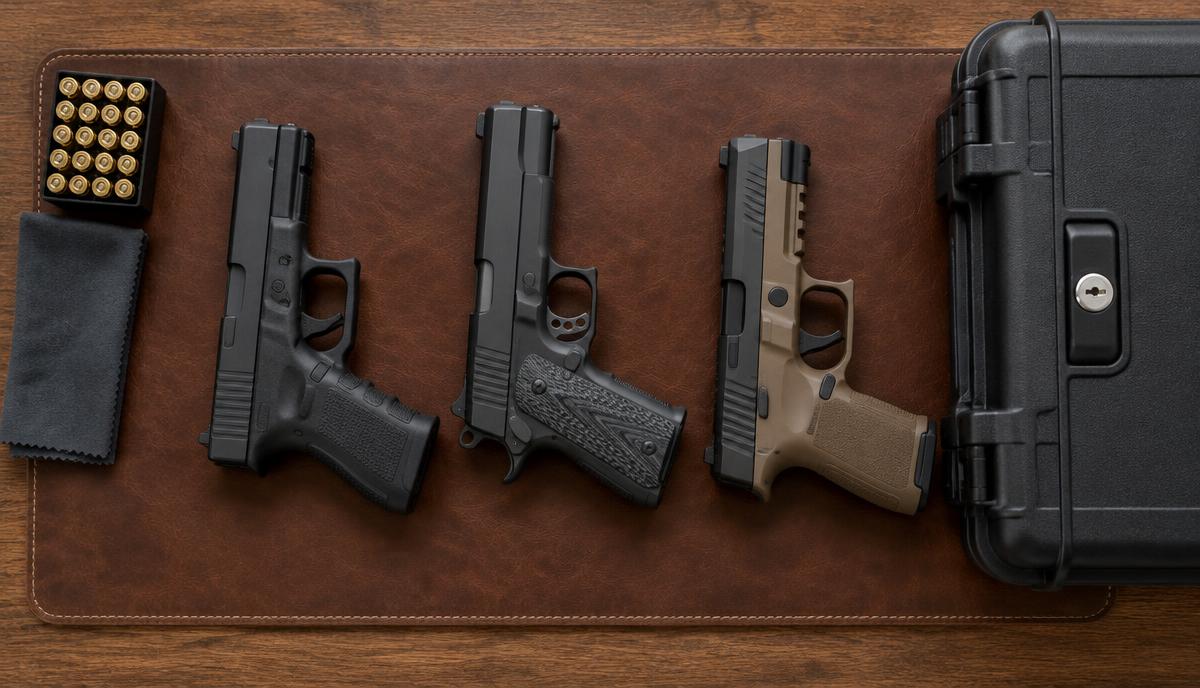
Searching for a 9mm pistol for sale in South Africa is about more than finding a familiar badge at a tempting price. For a used self-defence handgun, condition, fit, local support and a lawful transfer matter more than shiny accessories. This guide covers popular makes, sensible inspection questions and the Section 13 licensing route, so you can compare adverts without rushing into the wrong purchase.
Key takeaways
- Choose the individual pistol on condition and suitability, not brand reputation alone.
- Budget for training, secure storage, dealer charges and licensing costs alongside the purchase price.
- Have a registered dealer or qualified gunsmith inspect a used handgun before committing.
- Use a SAPS-registered firearms dealer to handle your private-sale transfer and agree custody arrangements in writing.
- You need the appropriate competency and an approved firearm licence before taking possession; paying does not authorise collection.
Start with your needs, not the cheapest advert
For most buyers considering a used 9mm for self-defence, the sensible starting point is a conventional, unmodified handgun with accessible spares and professional support. Ask whether the particular model suits your hands, whether you can operate its controls safely under instruction, and whether you can afford regular training.
Full-size, compact and smaller pistols involve different compromises. A smaller handgun is not automatically easier for a beginner to handle, while a larger model may be less practical for everyday lawful carry. Arrange any hands-on comparison through a dealer, with the firearm made safe and handled under supervision.
Check the chambering carefully. South African adverts commonly use “9mm” to mean 9×19mm Parabellum, also called 9mm Luger. Other cartridges contain “9mm” in their names and are not interchangeable. Have the dealer verify the exact calibre against the firearm and its documentation.
Browse Guns & Firearms on Geebo with a shortlist rather than chasing every low price. A clean, supported example of a modestly priced model can be a better purchase than a neglected premium pistol.
Popular used 9mm makes in South Africa
Glock, CZ, Taurus, Beretta, Vektor and SIG Sauer all appear in South African handgun discussions and used adverts. Their ranges span different sizes, operating systems and generations. The name on the slide is only the start of the comparison.
| Make and examples | Why buyers consider them | What to verify used |
|---|---|---|
| Glock 17 and 19 | Established polymer-framed, striker-fired options in full-size and compact formats. | Exact generation, modifications, service history and correct magazines. |
| CZ 75, P-07 and P-10 families | A choice of metal- and polymer-framed designs with different operating systems. | Exact variant, control layout, wear and model-specific parts availability. |
| Taurus G2 and G3 families | Often considered by buyers working to a tighter purchase budget. | Individual condition, local support and whether included magazines are correct. |
| Beretta 92 family | A long-established family of full-size, hammer-fired pistols. | Variant, age, professional condition assessment and maintenance history. |
| Vektor/Denel Z88 | A South African-made, Beretta 92-derived design with local familiarity. | Age-related wear, corrosion, provenance and actual spares availability. |
| SIG Sauer P226, P229 and P320 | Options spanning metal-framed hammer-fired and polymer-framed striker-fired designs. | Exact chambering, variant, service support and applicable manufacturer notices. |
Glock and CZ: compare the specific versions
A Glock 19 and a CZ P-07 are often considered in the same broad compact-handgun search, but they do not have identical controls or operating systems. Likewise, a steel-framed CZ 75 is a different proposition from a polymer-framed P-10. Ask an instructor to explain the differences without assuming one design suits everyone.
For Glock buyers, generation and configuration affect accessory compatibility. Treat aftermarket trigger work and unexplained internal changes cautiously. Our Glock buying guide for South Africa gives additional context for narrowing a shortlist.
Taurus, Beretta, Z88 and SIG: look beyond the badge
A Taurus should receive the same careful inspection as a more expensive pistol. With an older Beretta or Z88, honest cosmetic wear is not necessarily a deal-breaker, but age makes maintenance history and a gunsmith's assessment important. Do not assume every Beretta component fits a Z88.
SIG Sauer models vary substantially, and some model families include several chamberings. Confirm the exact example is 9×19mm. For any make, ask the dealer to check relevant manufacturer recalls, safety notices or upgrade programmes and whether the individual pistol is affected.
What to check before buying a used 9mm
Photographs can help screen an advert, but they cannot establish mechanical safety or reliability. Ask for clear images of both sides and visible wear, then arrange an inspection at a registered dealer. There is no need to publish identity documents, licence copies or a complete serial number in an open advert.
- Confirm the seller's authority. Have the dealer verify identity, lawful possession and authority to sell. An estate or business sale may involve additional documents and authorised representatives.
- Match the firearm to its paperwork. The dealer should check the make, model, calibre and serial details. Unexplained discrepancies must be resolved before proceeding.
- Ask about history. Establish ownership history, known repairs, modifications, corrosion and any recurring faults. Treat claimed round counts as unverified unless supported by records.
- Arrange a professional inspection. Ask a gunsmith to assess the barrel, frame, slide, safety-related components and general mechanical condition. Do not attempt an unfamiliar strip-down yourself.
- Inspect the included equipment. Confirm magazine condition and compatibility. A box of questionable accessories should not distract from the pistol's condition.
- Request a written assessment where practical. Any function or live-fire evaluation should be arranged lawfully through a dealer or qualified professional, not improvised at a private meeting.
- Record what is being sold. Put the exact firearm, included items, known defects, price and inspection conditions into the agreement.
External finish wear and mechanical deterioration are not the same thing. A lightly marked pistol may have been poorly maintained, while a regularly carried example may have received proper servicing. Neither appearance nor an enthusiastic seller replaces an inspection.
Walk away if someone refuses dealer verification, pressures you into immediate payment, offers altered paperwork or says you can take the gun while the licence is pending. “The application is in” is not permission to possess it.
Section 13: the self-defence licensing process
The Firearms Control Act 60 of 2000 governs civilian firearm licensing. Section 13 provides for a firearm licence for self-defence, including a handgun that is not fully automatic. An applicant must satisfy the legal requirements, including showing a need for self-defence that cannot reasonably be met by means other than possessing a firearm.
A Section 13 licence is generally valid for five years, and a person may hold only one firearm licence under this section. It is not a blanket authorisation to buy or possess other handguns.
A practical application sequence
- Complete the required training. Use an appropriately accredited training provider for the prescribed legal-knowledge and handgun training. A training certificate is not itself a SAPS competency certificate.
- Obtain the appropriate SAPS competency. Confirm the current application requirements with your local Designated Firearms Officer, or DFO. Ask about the accepted sequence for competency and licence submissions.
- Select the firearm and document the transaction. Agree the sale subject to the required licensing and use a SAPS-registered dealer to handle the private transfer. Record where the firearm will remain lawfully held.
- Prepare your SAPS 271 application. Apply for the specific firearm under Section 13, with the required supporting documents and a truthful, individual motivation. Generic claims do not replace your actual circumstances.
- Arrange compliant secure storage. Confirm the applicable safe requirements and installation with your DFO or dealer. Cooperate with any required checks.
- Wait for approval and lawful collection. Do not take possession until the appropriate competency and firearm licence are approved and the dealer has verified the required licence documentation for release.
Payment, a receipt, a competency certificate or a submitted SAPS 271 application does not replace the firearm licence. Confirm the current collection requirements with the dealer and DFO rather than relying on a message saying an application has progressed.
Do not plan around a promised approval date. Processing circumstances vary. Agree dealer storage charges, responsibility for maintenance and what happens if the licence is refused or the application takes longer than expected.
How Sections 15, 16, 16A and 17 differ
Section 15 covers occasional hunting and sports shooting; Section 16 covers dedicated hunting and dedicated sports shooting; Section 16A concerns professional hunting; and Section 17 concerns private collection. Each has its own eligibility and purpose requirements. They are not interchangeable shortcuts around a Section 13 application.
If you already own firearms or have dedicated status, discuss the appropriate licensing category with your DFO. For broader context, read our full legal buy & sell guide.
Compare the total cost, not just the asking price
When comparing pistols for sale, separate the firearm price from the cost of becoming a properly equipped, lawful owner. Include competency training, application fees, a compliant safe and installation, inspection costs, dealer administration, storage and suitable safety equipment.
Budget for ongoing instruction and maintenance too. A discounted handgun needing professional repairs or difficult-to-source magazines may cost more overall than a better-supported example.
Used asking prices depend on model, generation, condition, accessories and seller circumstances. Compare genuinely similar examples and obtain current dealer quotations. Any typical asking range is only a rough guide, not a valuation or evidence of completed sale prices.
Selling on Geebo
Geebo is a free South African classifieds site with a Guns & Firearms section. If you are selling a legally held 9mm, post a free gun ad with enough detail for buyers to assess suitability before arranging dealer checks.
- State the make, exact model, calibre and relevant generation or variant.
- Describe condition honestly and disclose known defects and modifications.
- List the asking price, included magazines and other accessories separately.
- Give a general location, not your home address or firearm-storage details.
- State that the transaction will be handled through a SAPS-registered dealer and possession depends on approved licensing.
Agree in writing who pays inspection, dealer and storage charges, when payment is due, and what happens if the application fails. Never release a firearm because a buyer sends a payment screenshot or says they already have competency.
Read our safety tips before exchanging personal information. For transaction preparation, see how to sell a gun in South Africa. Buyers searching for handguns for sale in South Africa should apply the same verification standards wherever they find an advert.
Frequently asked questions
What is the best used 9mm pistol for self-defence?
There is no universal winner. Shortlist a suitable, professionally inspected pistol with accessible support, then compare fit, controls, condition and total ownership cost. Brand reputation cannot guarantee the condition of a particular used firearm.
Can I buy a pistol before my licence is approved?
You can conclude a purchase subject to lawful custody and licensing arrangements, but payment does not authorise possession. Use a registered dealer, document storage and refund terms, and wait for the required approvals and release checks before collection.
Is competency the same as a Section 13 licence?
No. Competency concerns your eligibility for the relevant firearm category. A Section 13 licence authorises possession of the specific firearm for which it was issued. Training certification, competency and firearm licensing are distinct requirements.
How long is a Section 13 licence valid?
A Section 13 self-defence licence is generally valid for five years. Check its expiry date and apply for renewal at least 90 days before expiry, as required by the Act. Confirm current renewal documentation with your DFO.
Is a second-hand Z88 still worth considering?
Potentially, if its size suits you and a qualified gunsmith finds it sound. Check maintenance history, corrosion and current parts support. Local familiarity does not guarantee that every component is readily available or interchangeable with Beretta parts.
Should I pay a deposit before an inspection?
Prefer verification and clear written terms first. If a deposit is necessary, establish the recipient's identity, what it secures, whether it is refundable, and how inspection findings or licence refusal affect it. Avoid pressure to make an immediate payment.
General guidance, not legal advice; confirm with your DFO or a registered dealer.
South African firearm laws — quick FAQ
Buying or selling a firearm in South Africa is regulated by the Firearms Control Act. Here are the essentials every buyer and seller should know before listing or replying to an ad.
This summary is general guidance, not legal advice. Always confirm current SAPS requirements with your Designated Firearms Officer (DFO) or a registered dealer.
Ready to buy or sell?
Post a free ad on Geebo and reach thousands of buyers across South Africa.
Post Free Ad